Cabins That Smell Clean, Not Covered
Odor Removal & Interior Sanitization in Des Moines and the surrounding towns for vehicles with persistent smoke, pet, or food odors
Absorbed odors in upholstery, carpet, and headliners persist despite air fresheners because scent molecules embed in porous materials rather than floating freely in cabin air. Noble Detailing uses professional-grade sanitization solutions in Des Moines and nearby cities that break down odor sources at the molecular level rather than masking them with fragrance. Drivers who recently purchased used vehicles or who transport pets regularly notice the absence of lingering smells once treatment addresses the fibers and foam holding those odors.
The sanitization targets fabric seats, floor mats, trunk linings, and ventilation pathways where smoke residue, pet dander, and spilled liquids create persistent odor problems. Deep cleaning precedes sanitization to remove the physical contaminants that harbor bacteria and scent compounds, improving both air quality and the effectiveness of subsequent protective treatments.
Arrange an interior assessment to identify the odor sources affecting your vehicle's cabin environment.
How Sanitization Addresses Embedded Odors
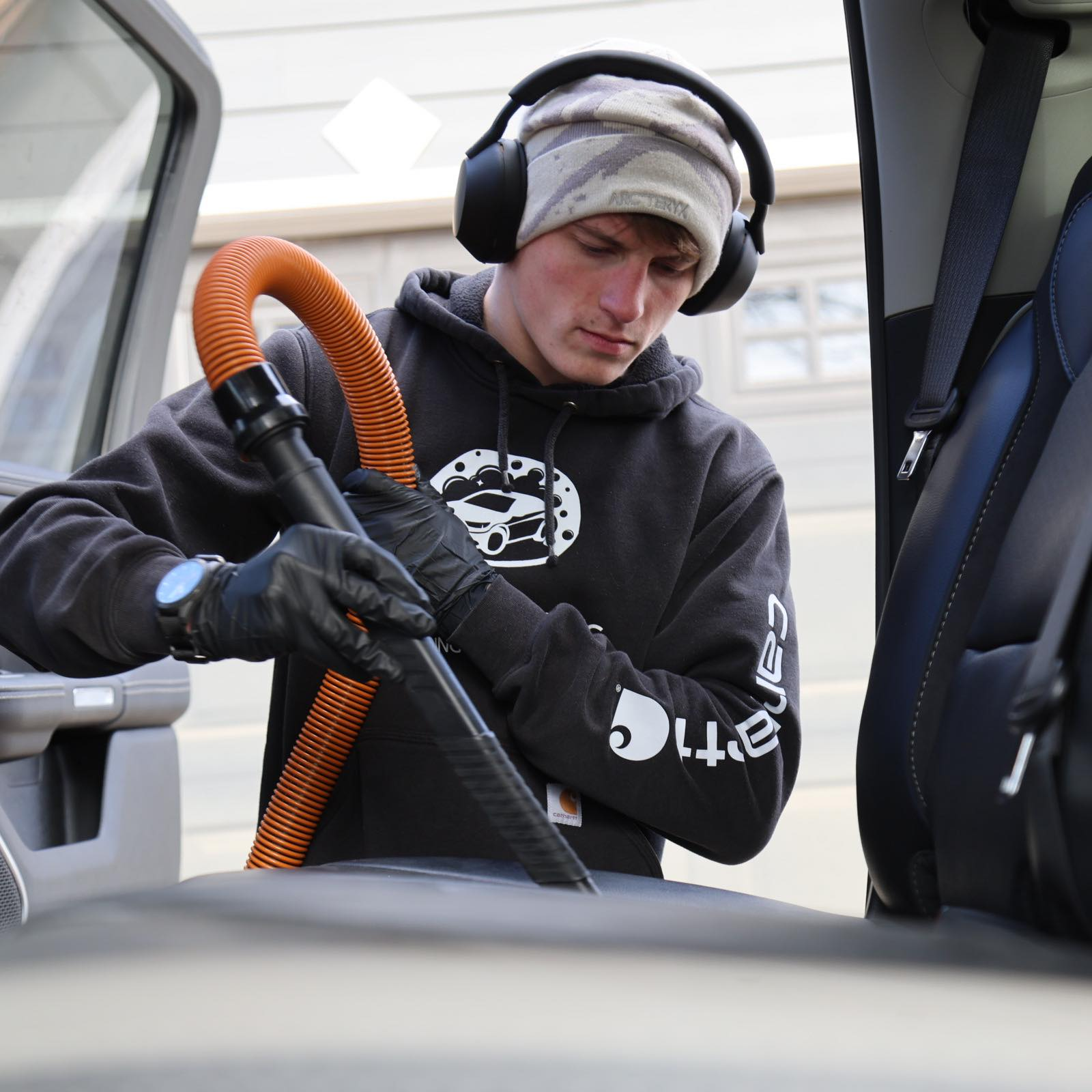
Effective odor removal requires reaching the foam backing beneath carpet and the stuffing inside seat cushions, not just surface fibers. Extraction tools pull cleaning solution deep into these layers, then remove it along with dissolved contaminants, while enzymatic treatments neutralize organic residues from pet accidents or food spills that standard cleaners leave behind.
Once the process finishes, you breathe air free of stale cigarette traces or wet dog scent, and passengers entering the vehicle no longer detect the musty odor common in cars stored through humid Iowa summers. Ventilation systems blow fresh air rather than recirculating trapped smells from contaminated cabin filters and duct surfaces.
This service complements full interior detailing but can be performed independently when odor presents the primary concern. Severe cases involving flood damage or biological contamination may require additional treatment cycles or component replacement beyond what cleaning alone achieves.
Answers to Frequent Service Questions
Customers considering odor removal usually want clarity on what the process involves and how permanent the results prove under continued use.
What causes odors to return after standard cleaning attempts?
Surface cleaning removes visible dirt but leaves odor molecules trapped in foam padding and fabric weave, where they continue releasing scent compounds until extraction or enzymatic treatment breaks down the source material rather than temporarily suppressing it.
How does the sanitization process differ from using store-bought sprays?
Professional solutions penetrate upholstery backing and carpet padding through heated extraction, while retail sprays coat surface fibers with fragrance that fades within days, leaving the underlying odor source untouched and still active.
Why do pet odors require different treatment than smoke odors?
Pet accidents involve organic proteins that respond to enzymatic cleaners, while smoke deposits consist of tar and particulate residue requiring solvent-based treatments, making accurate odor identification essential for selecting the correct neutralization approach.
When should cabin filters be replaced during odor removal service?
Replacing cabin air filters during sanitization prevents recontamination, since filters saturated with smoke particles or mold spores reintroduce odors each time the ventilation system runs, undermining the cleaning performed on interior surfaces.
What results can drivers in Des Moines and the surrounding area expect after treatment?
Most vehicles show complete odor elimination after one thorough treatment, though cars with years of accumulated smoke exposure or repeated pet accidents may need secondary treatment to address residue that migrated into hard-to-reach crevices behind trim panels.
Noble Detailing evaluates odor severity and contamination extent before beginning treatment, ensuring the approach matches the specific conditions affecting your vehicle. Book an odor removal consultation to discuss the particular concerns impacting your cabin environment.