
Finishes That Reflect Without Distortion
Scratch & Swirl Removal in Des Moines and surrounding towns for newer vehicles showing minor paint imperfections from regular washing and use
Light reflects inconsistently off clear coat scratched by automated car washes, improper drying techniques, and abrasive contaminants dragged across paint during routine cleaning. Swirl marks appear as fine circular scratches visible under direct sunlight or garage lighting, creating a hazy appearance that prevents paint from displaying its full color depth and gloss potential. These surface-level imperfections don't penetrate through clear coat layers but accumulate over time until the finish looks dull despite regular washing. Noble Detailing targets these minor paint defects through controlled polishing that levels the clear coat surface without removing excessive material, restoring the reflective clarity newer vehicles displayed before wash-induced marring developed.
The removal process uses graduated polishing compounds that smooth microscopic ridges created by scratches, allowing light to reflect uniformly rather than scattering across damaged areas. This approach maintains clear coat thickness while improving visual quality, making it suitable for vehicles needing enhancement rather than full paint correction.
Request a paint assessment to evaluate the severity of surface imperfections and determine the appropriate correction level.
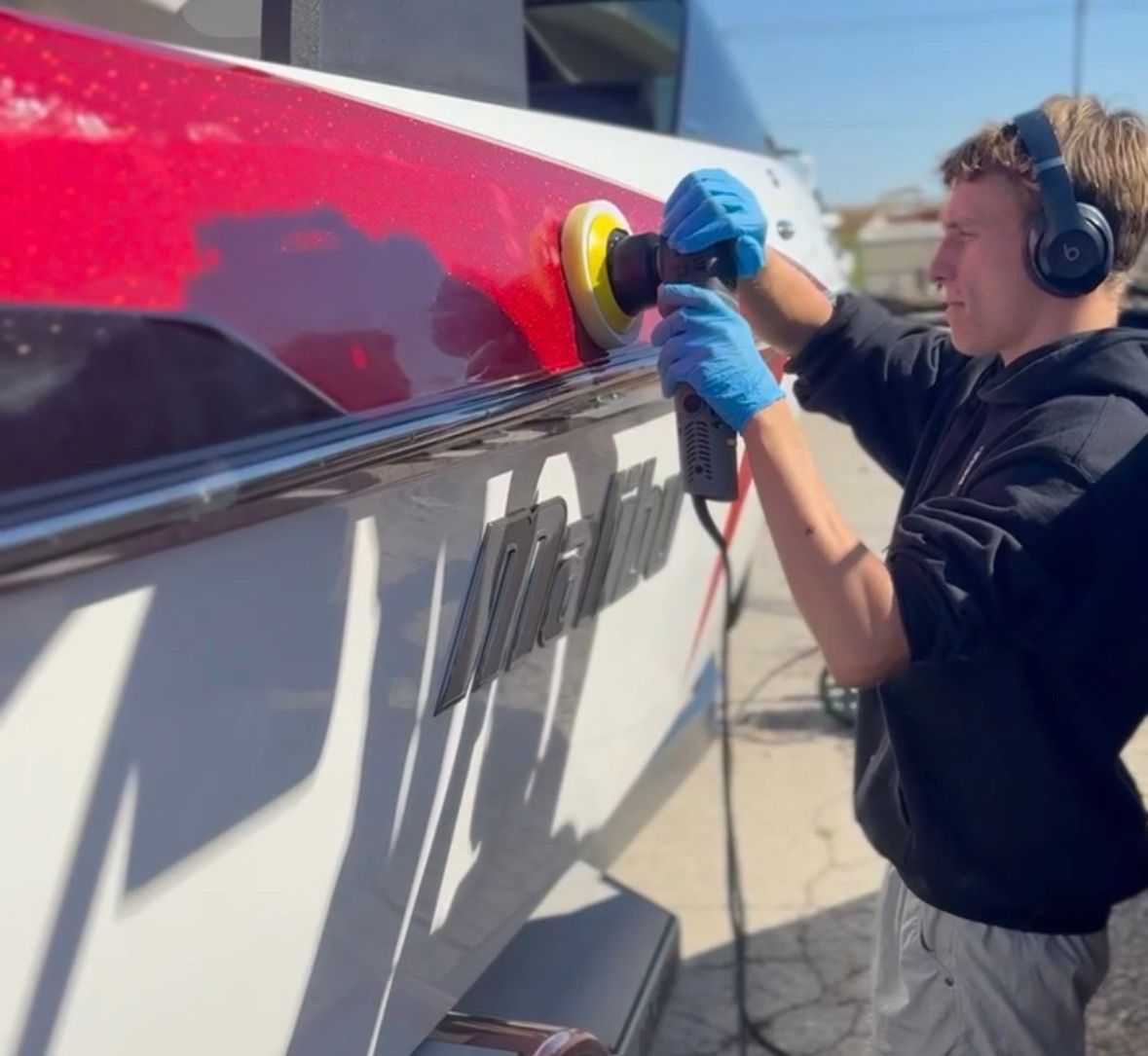
What Changes After Surface Imperfections Are Addressed
Scratch and swirl removal works by leveling the clear coat surface so light reflects at consistent angles across the panel. Machine polishing with fine abrasives removes high points surrounding scratches, creating a uniform plane that eliminates the light distortion causing visible swirl patterns and hazing, particularly noticeable on darker paint colors where imperfections contrast sharply against the base color.
After Noble Detailing completes the correction, you see sharp reflections in body panels rather than blurred images, and paint displays full color saturation instead of the washed-out appearance caused by light scattering across scratched surfaces. Swirl marks visible under dealership lighting or direct sun disappear, revealing the crisp finish the vehicle showed before accumulating wash-induced damage.
This service improves gloss and finish quality but doesn't address deep scratches that penetrate through clear coat into base paint layers, which require touch-up or repainting rather than polishing. The process can be combined with ceramic coating application or paint sealant to protect the corrected finish from rapid re-marring, particularly for owners who continue using automated wash facilities.
What Property Owners Usually Ask
Vehicle owners noticing diminished paint clarity or visible swirl patterns typically ask about the correction process and long-term results before scheduling service.
What causes swirl marks to develop even with regular car washing?
Automated brush washes drag abrasive particles across paint in circular patterns, and drying with contaminated towels or improper technique creates fine scratches that accumulate with each wash cycle, gradually building visible swirl patterns that dull the finish.
How much clear coat gets removed during scratch and swirl correction?
Minor correction removes only one to two microns of clear coat—enough to level surface scratches but far below the threshold that would compromise UV protection or reduce remaining correction potential for future polishing needs.
Why does this service work better on newer vehicles than older ones?
Newer clear coat retains full thickness and hasn't experienced oxidation or heavy weathering, allowing polishing to produce dramatic clarity improvements, while aged paint may require more aggressive correction that crosses into full paint correction rather than quick enhancement.
When should swirl removal be performed relative to other appearance services?
Correction happens after decontamination removes embedded particles but before applying any protective coatings, since polishing removes existing wax or sealant while contamination left on the surface would create new scratches during the polishing process itself.
What maintenance approach prevents swirl marks from returning after correction?
Hand washing with quality microfiber materials, using separate wash and drying towels, and avoiding automated brush washes all prevent the mechanical damage that creates new swirl patterns on freshly corrected paint surfaces.
Noble Detailing evaluates paint condition under controlled lighting that reveals imperfections not visible in diffused outdoor conditions, providing accurate assessment of correction needs before beginning work. Schedule a finish evaluation to determine whether quick enhancement addresses your paint concerns or whether deeper correction would better match your quality expectations.