Restoring Clarity Beneath Surface Imperfections
Paint Correction in Des Moines and surrounding areas for vehicles showing swirl marks, light scratches, and oxidized finish
Automated car washes, improper drying techniques, and abrasive cleaning tools create thousands of microscopic scratches in vehicle paint over time, visible as swirl marks under direct sunlight or artificial lighting. Noble Detailing performs paint correction using multi-stage polishing that removes a controlled amount of clear coat to level the surface and eliminate these imperfections. The work addresses clear coat damage rather than color coat issues, restoring the reflective properties that make paint appear deep and glossy instead of hazy or dull.
The correction process uses progressive abrasive compounds and polishing pads matched to paint hardness and damage severity, with each stage removing finer scratches left by the previous step. Professional tools maintain controlled heat and pressure to avoid burning through clear coat on edges and body lines where paint thickness is naturally reduced.
Request a paint evaluation to determine the correction level needed for your vehicle's current condition.
What Changes After Clear Coat Leveling
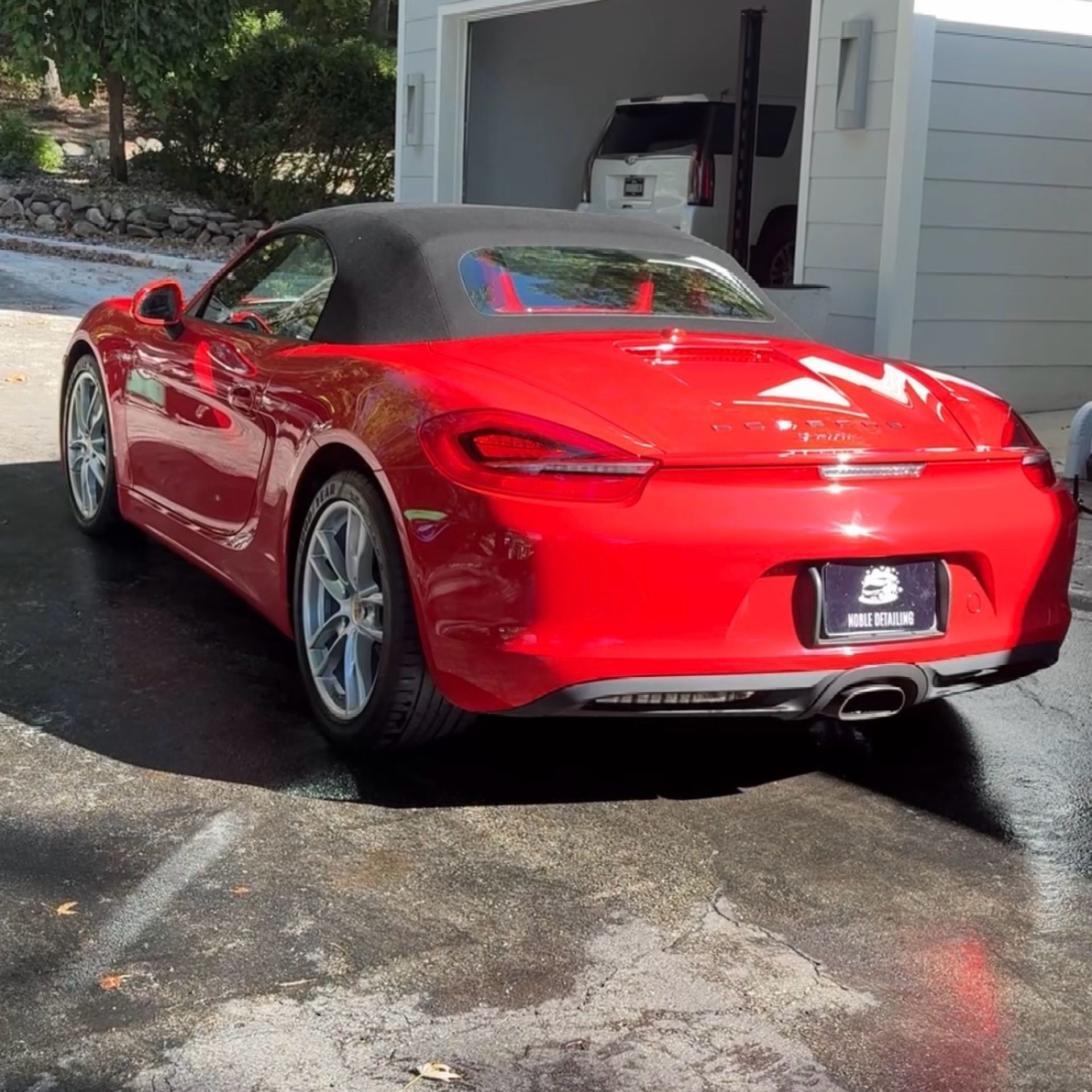
Paint correction removes the damaged clear coat layer containing swirl marks and light scratches, revealing undamaged material underneath that reflects light uniformly. The difference becomes obvious when viewing paint panels at angles under overhead lighting, where corrected surfaces show clean reflections instead of the scattered light pattern that swirl marks create.
You notice increased color depth and clarity similar to how the vehicle appeared when new, with body lines and reflections appearing sharp rather than distorted by surface imperfections. Dark-colored vehicles show the most dramatic improvement since swirl marks create more visible contrast against black, navy, and dark gray paint finishes.
Correction doesn't address deep scratches that penetrate through clear coat into color coat or primer layers, which require touch-up paint application before correction can improve surrounding areas. The service also works best when followed immediately by protective coating or sealant application, since freshly corrected paint has no remaining protection and will begin accumulating new damage from environmental exposure without additional treatment.
What Property Owners Usually Ask
Paint correction raises specific questions about the process, safety for different paint types, and how it coordinates with other detailing services.
What determines whether paint needs single-stage or multi-stage correction?
The depth and density of existing scratches and swirl marks determine the aggressiveness needed, with heavily damaged paint requiring coarser initial cutting followed by finer polishing stages to achieve clarity.
How much clear coat gets removed during correction?
Correction typically removes one to three microns of clear coat depending on damage severity, while factory clear coat measures fifty to seventy-five microns, leaving substantial protective thickness remaining after proper correction.
When should paint correction happen relative to ceramic coating?
Correction must be completed first and immediately before coating application so the coating bonds to clean, level paint and locks in the corrected finish.
What types of paint damage can't be corrected through polishing?
Deep scratches reaching base coat or primer, rock chips, acid etching that's penetrated through clear coat, and UV damage that's faded the color coat itself require repainting rather than correction.
How does Des Moine's climate affect paint condition over time?
Freeze-thaw cycles, road salt abrasion, and seasonal temperature swings accelerate clear coat breakdown and create more opportunities for scratch accumulation from ice scraping and winter maintenance activities.
Noble Detailing provides paint correction services throughout Des Moines and the surrounding area using professional polishing equipment and techniques matched to your vehicle's paint system. Schedule a paint assessment to determine the appropriate correction approach and discuss pairing with protective coating for long-term finish preservation.